

The first ACM Global Computing Education Conference (CompEd) was successfully held on May 17-19, 2019, in Chengdu, China
|
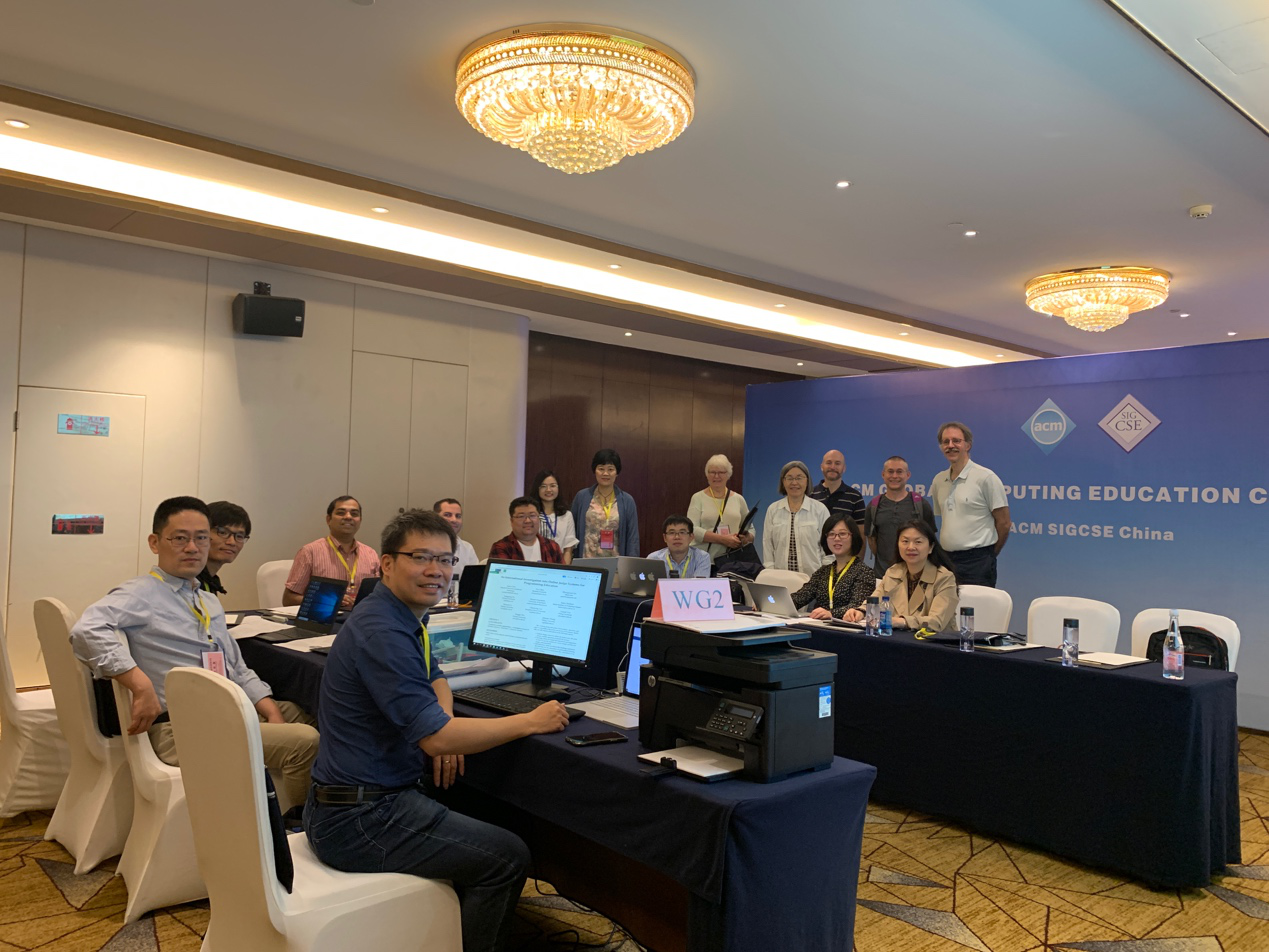
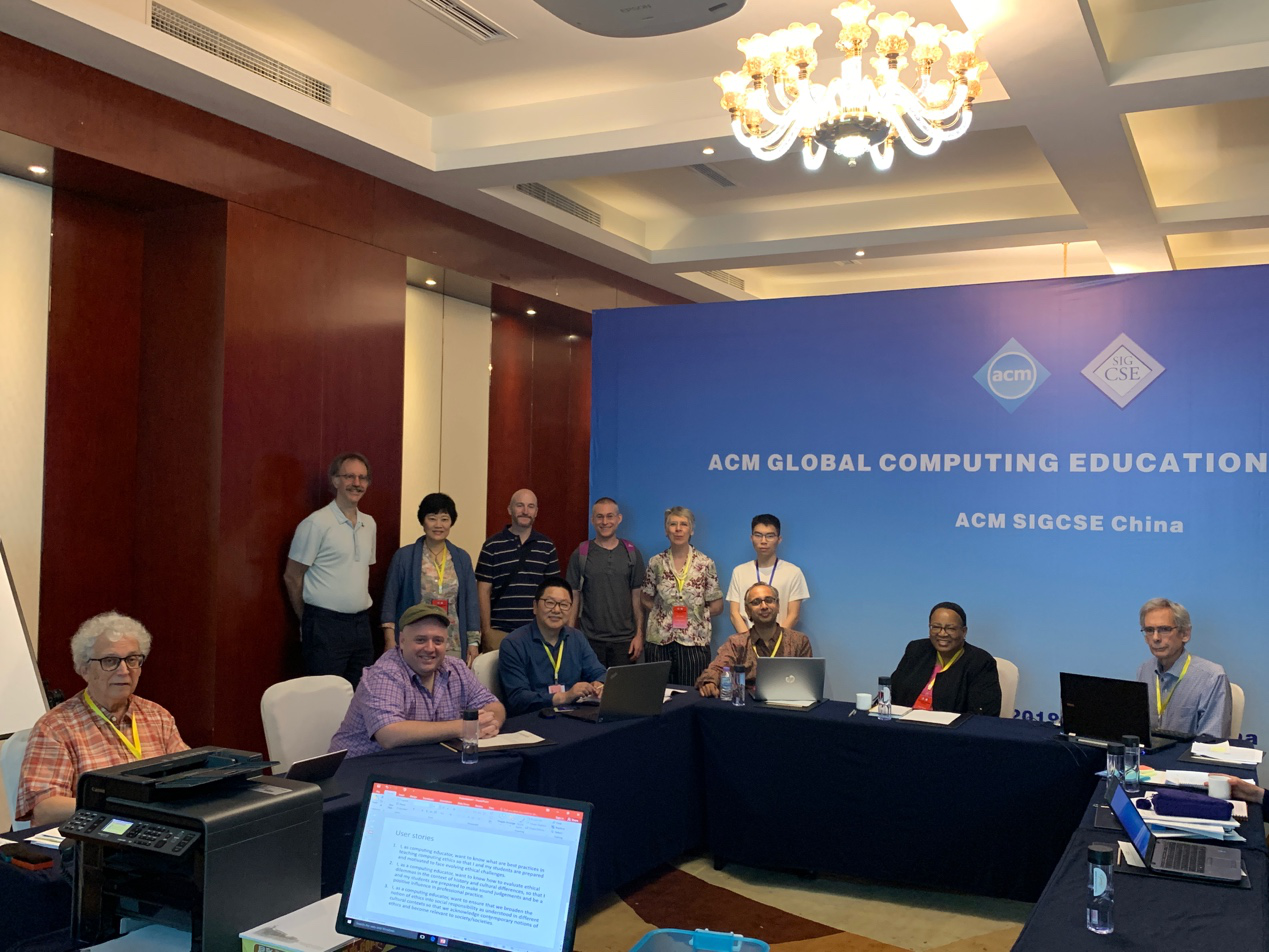
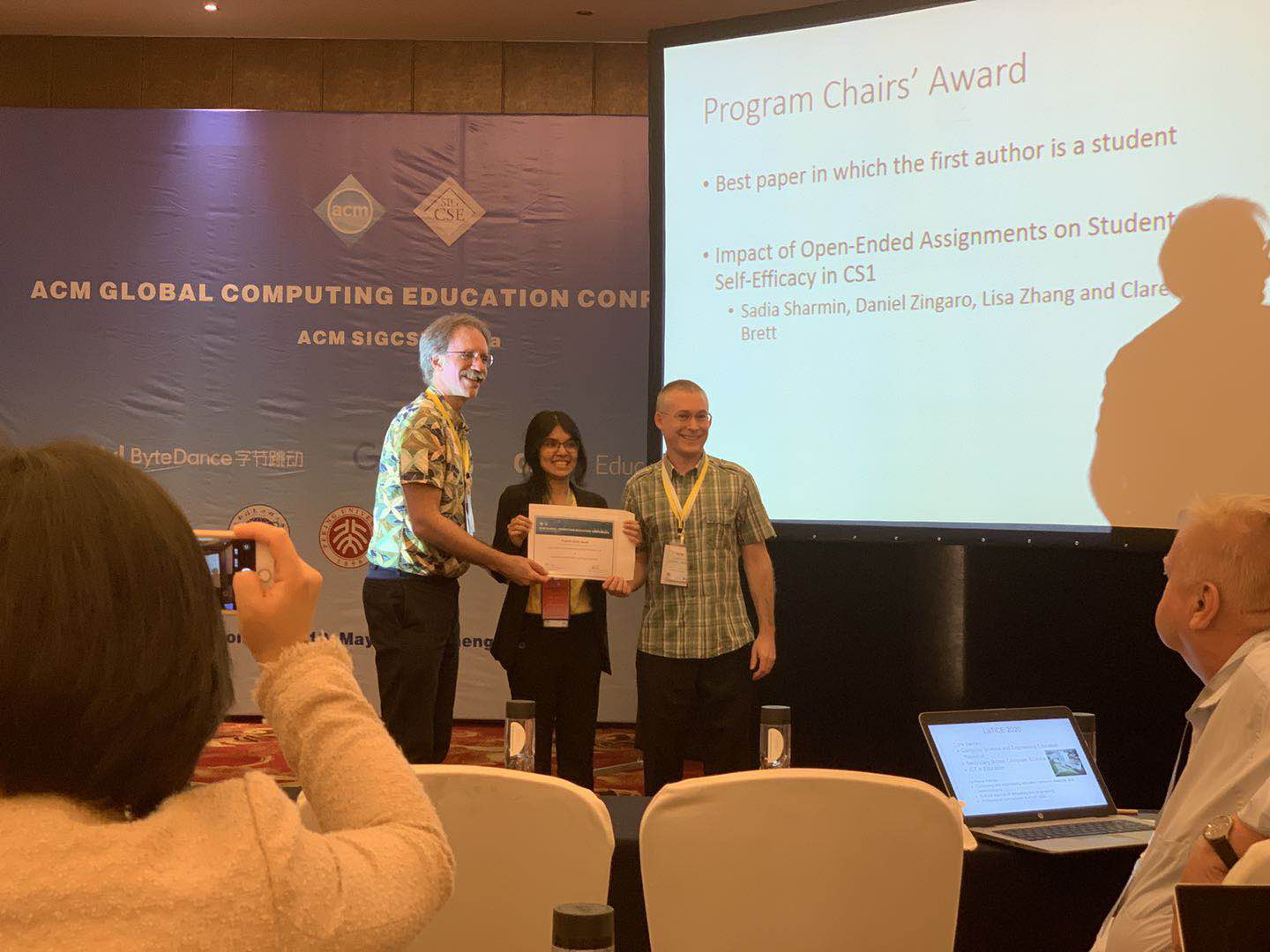
ACM SIGCSE successfully held the first ACM Global Computing Education Conference (CompEd) on May 17-19, 2019, in Chengdu, China, co-located with the ACM Turing Celebration Conference - China (ACM TURC 2019). CompEd is destined to be the leading global conference on computing education. At the intersection of computing and the learning sciences, the event seeks to promote global computing education development. More than 200 participants, including 99 from 11 different countries, registered CompEd 2019. Registrants of CompEd also attended the two morning keynote sessions and the SIGCSE China Symposium at TURC. Meanwhile, some TURC attendees also joined the discussion with scholars at CompEd. This greatly helps the CS-related researchers and teachers exchange ideas and information with each other face to face. Professor Amber Settle, the ACM SIGCSE Chair, together with Professor Stephen Cooper and Professor Andrew Luxton-Reilly, the program co-chairs of CompEd 2019, delivered the opening remarks. Dr. Paul Denny from the University of Auckland, New Zealand gave the keynote speech entitled “Four Million Questions and a Few Answers: Lessons from Research on Student-Generated Resources”. As a highlighted feature compared with other ACM SIGCSE conferences, three Working Groups towards the topics of online judge systems, peer instruction and teaching of computing ethics respectively were organized during this year CompEd. Moreover, two pre-conference workshops were held as well to promote increased program activity of ACM-W in the East Asia countries and to familiarize attendees with the drafting CC2020 project respectively. |
|

|
|

|
|
|
|
|
|

|
|
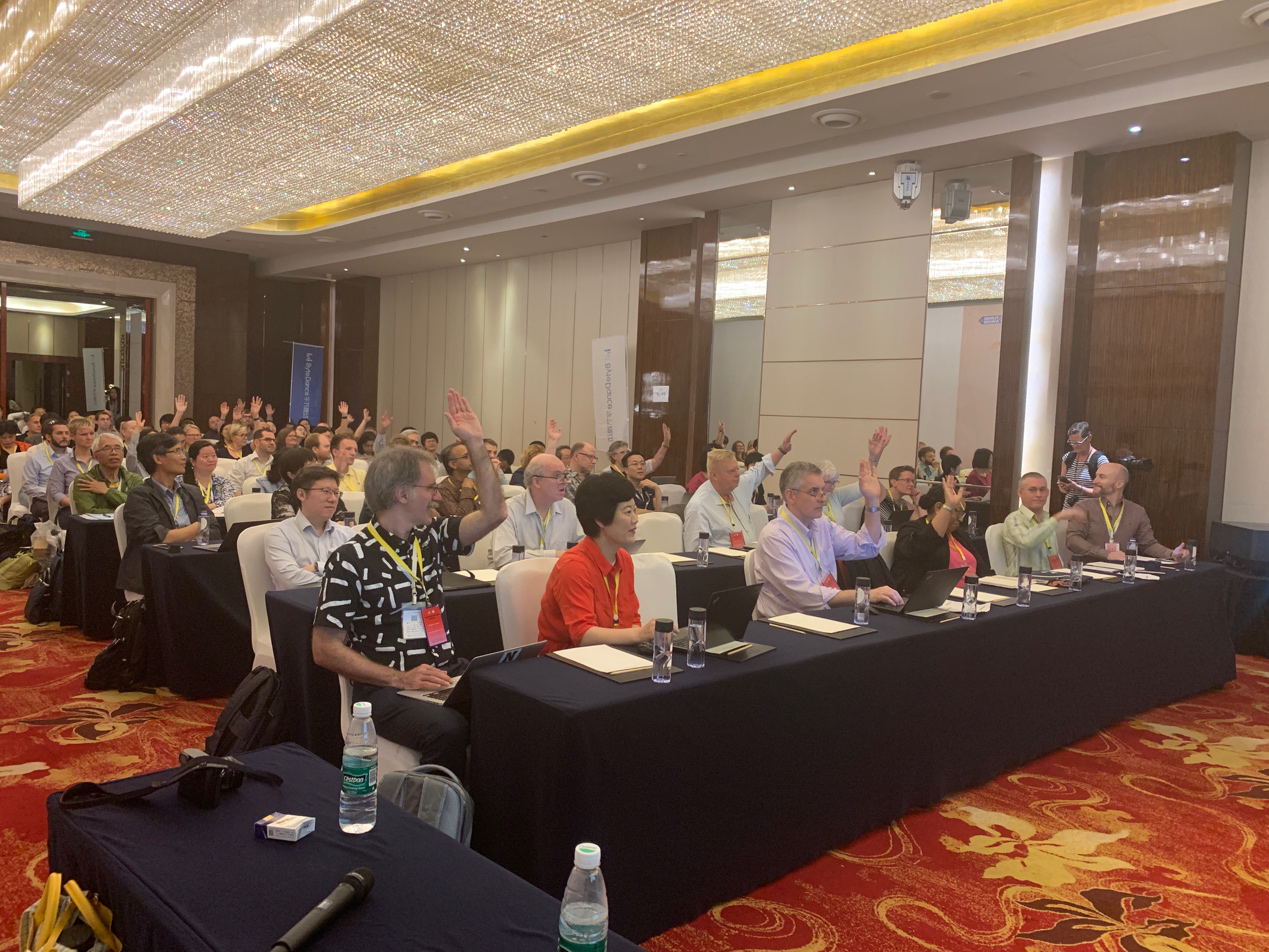
Fig 5. Participants listened to and interacted with speakers. |
|
|
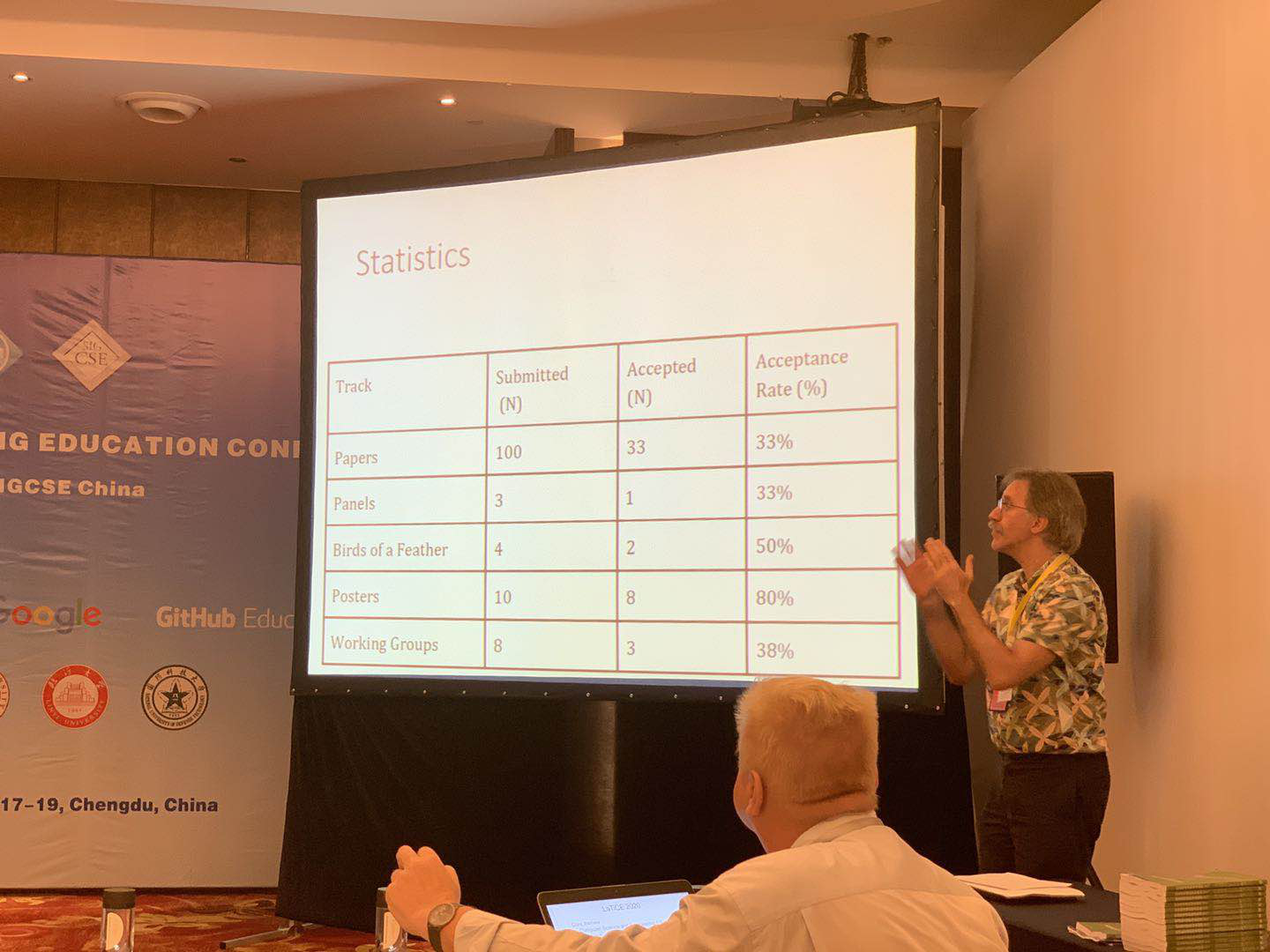
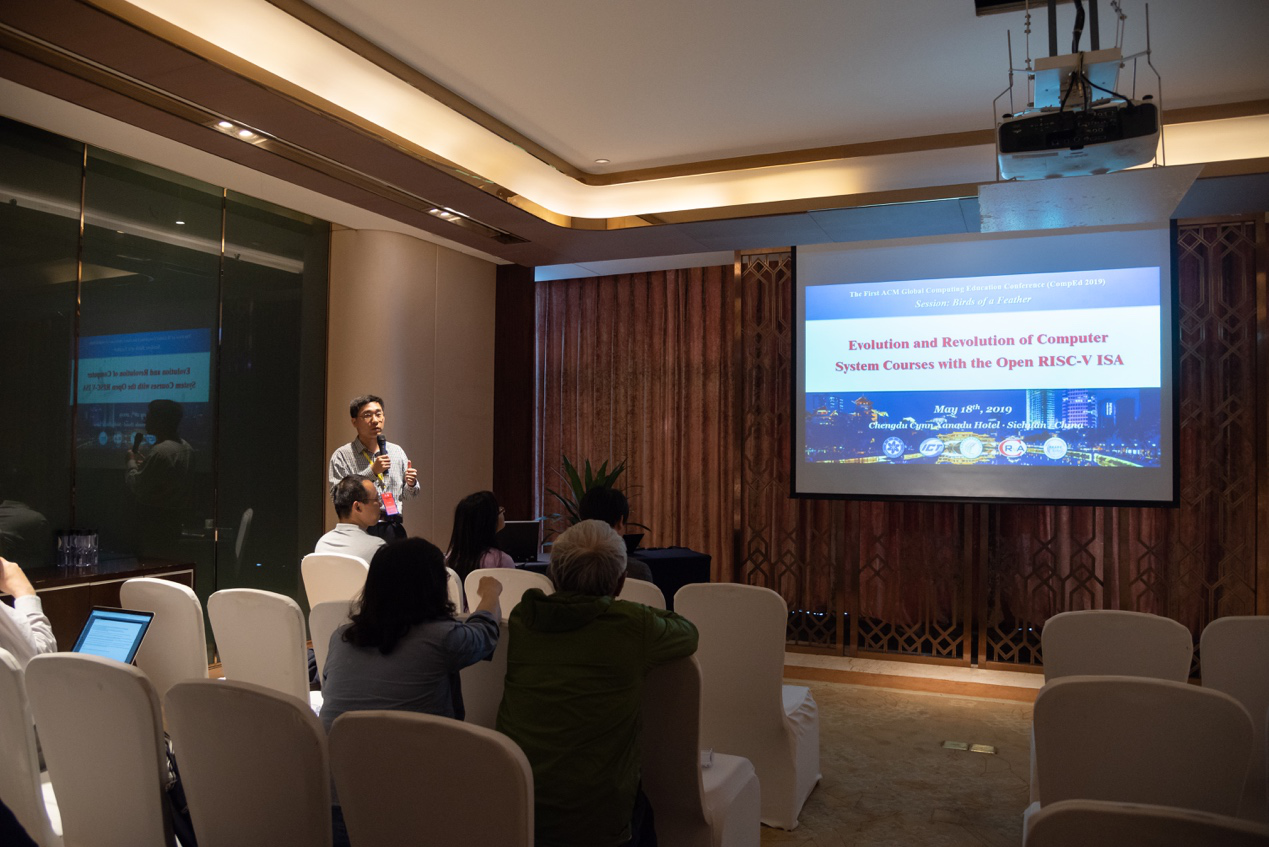
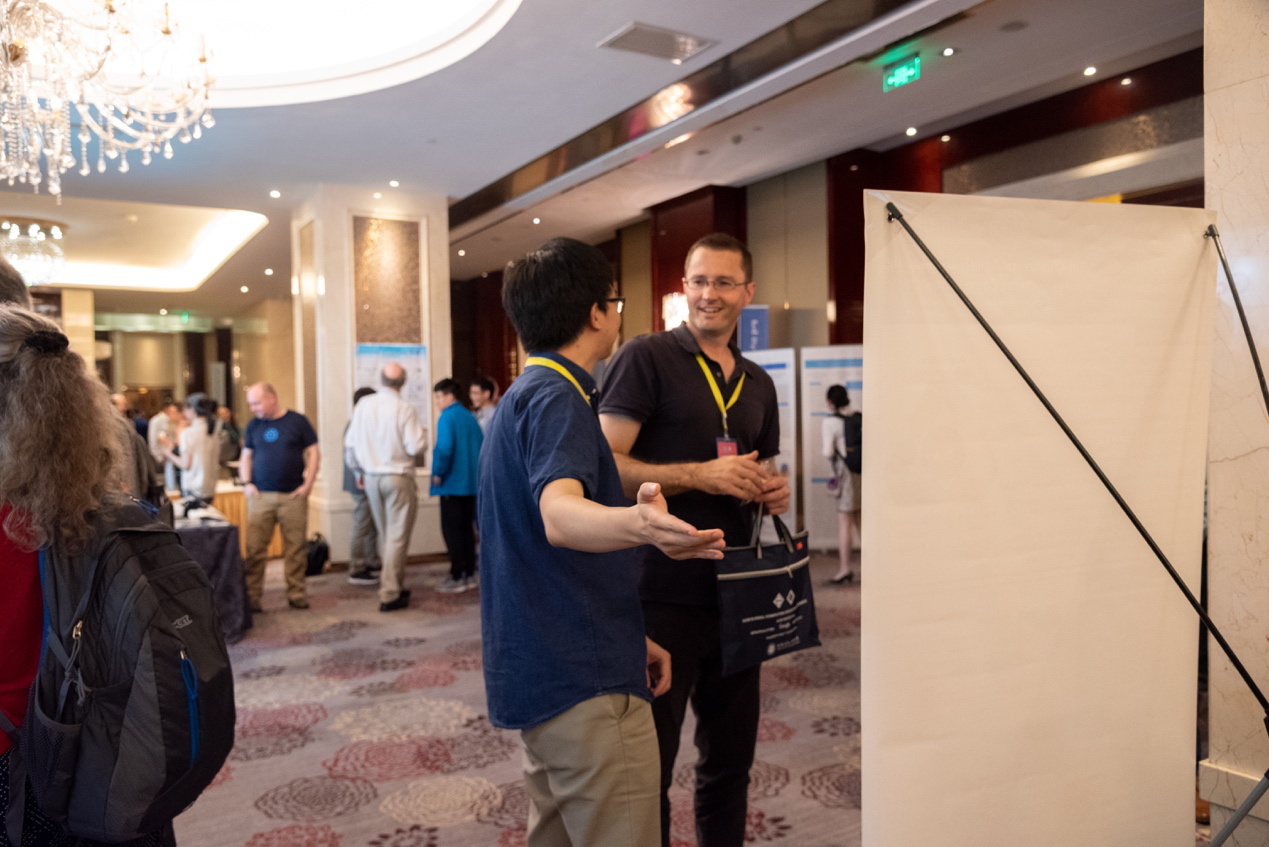
Submission types of this year CompEd include paper sessions, panels, working groups, birds-of-a-feather, and posters. 33 full papers and 8 posters were accepted finally. Through constant efforts from ACM China SIGCSE Chapter in recent years, 6 full papers from mainland China universities, National University of Defense Technology China, Peking University, Xi'an Jiaotong University, Xidian University, Southeast University and Jiangnan University respectively were accepted by CompEd. Especially, two of the top three papers (as ordered by reviewer average score) among the 33 accepted ones were from mainland Chinese authors. In addition, during the poster session, computing education researchers from Shanghai Jiaotong University, Jiangnan University, Shanghai AchieveFun Info. Co., and University of Chinese Academy of Sciences (UCAS) respectively demonstrated their recent research results in the field of adaptable test design, development of computational thinking in Chinese elementary schools, code refactoring practice-driven curriculum in universities and hardware platform and experimental projects leveraged in computer systems courses. These posters and demos attracted a number of attendees to stop by the booths and discuss with the presenters. Moreover, Ke Zhang from UCAS organized one of the two Birds-of-a-Feather (BoF) sessions to discuss the evolution and revolution of computer systems courses with the emerging open RISC-V instruction set architecture. |
|
|
|
|
|
|
|
|
|
|
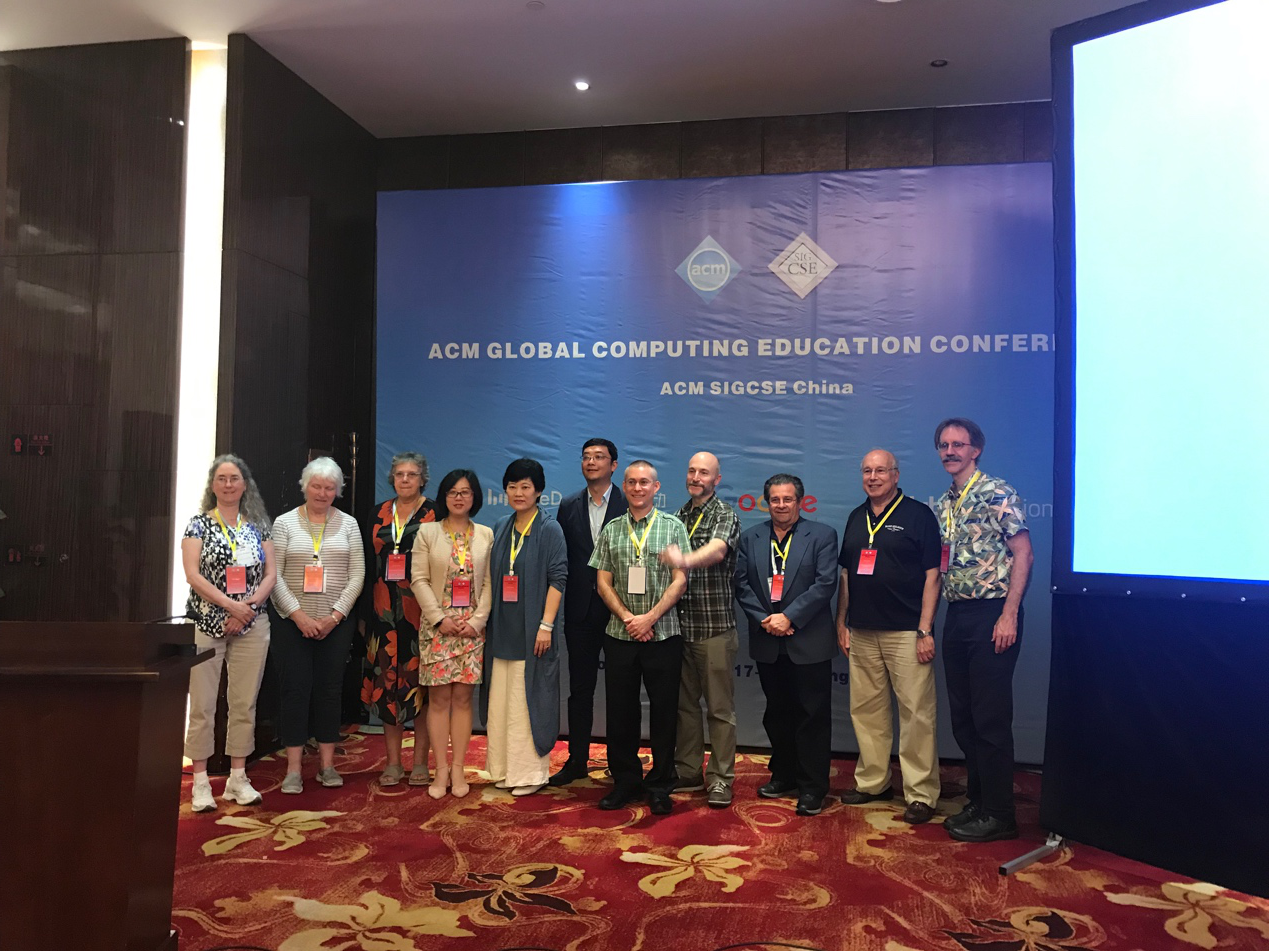
Through the three-day wonderful presentations and reports from researchers around the world, CompEd 2019 successfully established a world-wide platform for researchers to communicate and exchange new ideas on computing education. Foreign participants also fully experienced the great changes and developments in Chinese computing education in recent years, indicating the significant impact of China in global CS education. |
|
|
|

|
|
|
CompEd Co-locate: ACM-W Asia Pacific Workshop 
ACM-W (ACM Council on Women in Computing) Asia Pacific Workshop, collocated with CompEd, was held in the afternoon of May 15th and the morning of 16th. The topic of this workshop is how to build ACM-W Asia Pacific Community. Via net meeting, ACM-W Chair, Professor Jodi Tims from Baldwin Wallace University in US gave a brief introduction to ACM-W global efforts; ACM-W Vice-Chair, Prof. Reyyan Ayfer from Bilkent University in Turkey, gave an introduction to ACM-Europe Experience. Assoc. Prof. Catherine Lang from La Trobe University in Australia introduced ACM-W highlights, objectives and activities. Assoc. Prof. Annemieke Craig from Deakin University in Australia, introduced women in computing and experiences with ACM-W events in Australia. Ten ACM-W members from Australia, Thailand, Indonesia, Japan, China, Malaysia, and Singapore attended this event. Two of them, Dr. Jenine Beekhuyzen from Tech Girls Movement and Dr. Jacqueline Tate from Coder Academy introduced outreach programs they conducted in Australia, and shared some approaches and cases for fundraising activities. Xiaochun Yang, an independent consultant from Shanghai AchieveFun Information Technology Co., Ltd., introduced ACM-W activities in Shanghai. At the end of this activity, attendees summarized key takeaways, raised future challenges, and suggested further actions. |
|

Left to Right Standing: Xiaochun Yang, Nor Layla, Annemieke Craig, Catherine Lang, Nobuko Kishi, Pornsiri Muenchaisri. Sitting: Bimlesh Wadhwa, Jenine Beekhuyzen, Jacquline Tate, Hiri Meidia. On Screen: Jodi Tims |
|
|
More information of CompEd 2019 could be found from Professor Brett Becker's (one of the members of CompEd Steering Committee) blog: |
|
other events: |