
ACM China SIGCSE Symposium and Council Meeting were held successfully at TURC 2021, July 30-August 1, 2021, in Hefei, China
|
ACM Turing Award Celebration Conference - China (ACM TURC 2021) was successfully held in Hefei, China, from July 30 to August 1, 2021, with the theme of AIoT, highlighting the characteristics of internationalization, intelligence and specialization. The computer science education symposium hosted by the China Association for Computing Machinery Special Interest Group on Computer Science Education (ACM SIGCSE China) was held in conjunction with TURC 2021. ACM SIGCSE China was established in 2016 to promote the internationalization of domestic computer education and provide a platform for computer educators to communicate. Since the first Turing Conference, SIGCSE China has continuously held four symposiums. This year symposium includes 5 invited talks, 1 panel discussion, and 10 paper presentations. 
|
||
|
Playback link for zoom meeting: https://pan.baidu.com/s/1HPquvbf3bnEZT5SGQmNxkA Passcode: 1111 |
||
Invited talks and panel sessionFrom 7:30 pm to 9:30 pm on July 30, Alison Clear, ACM/IEEE CC2020 Co-Chair Professor, and Professor John Impagliazzo, IEEE Fellow, IEEE Life Member, ACM Distinguished Educator, gave online invited talks respectively. The online invited presentations were hosted by Professor Qian Ying of East China Normal University. |
||
 |
 |
|
|
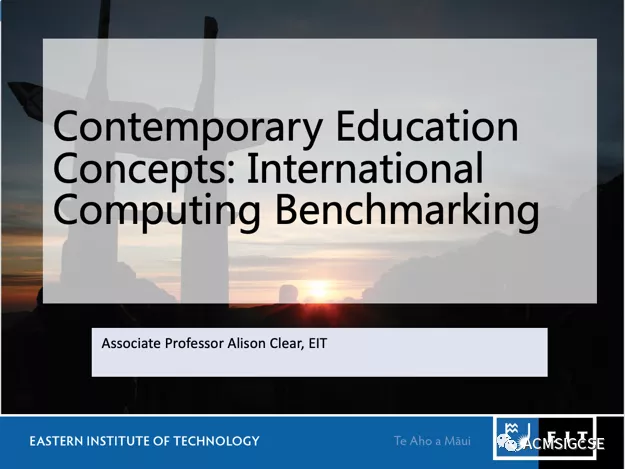
Professor Alison Clear is the leader of the CC2020 project and the winner of the ACM SIGCSE award for Lifetime Service to Computer Science Education. The title of her report was “Contemporary Education Concepts: International Computing Benchmarking”. In her talk, she summarized the main results of CC2020, including competency models and interactive computing tools. The report also looked at and analyzed the six discipline areas of computing that currently have ACM and IEEE-CS approved curricula: Computer Engineering, Computer Science, Software Engineering, Information Systems, Information Technology and Cyber Security. Alison also introduced in detail the development process of the Knowledge table visualization tool and its importance and relevance to all computing education stakeholders, demonstrated the Knowledge table visualization tool, and compared different degree majors on a global scale. In the report, Alison specifically mentioned Chinese experts participating in the CC2020 project. |
||
 |
 |
|
|
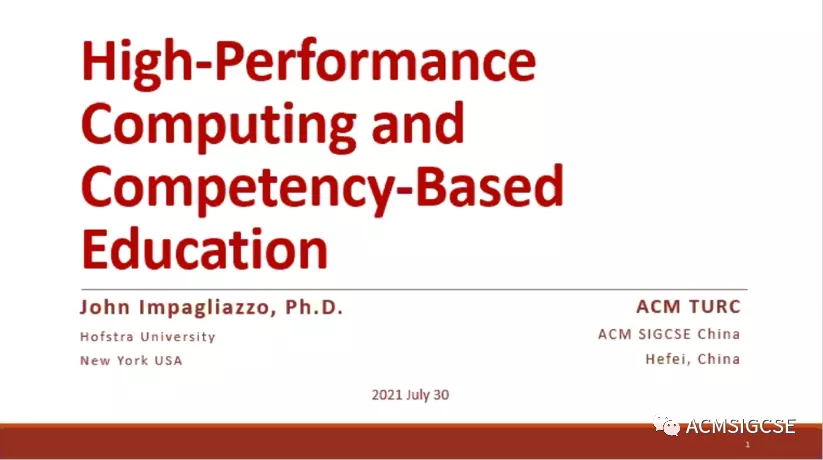
The second invited talk was given by John Impagliazzo, IEEE Fellow, IEEE Life Member, ACM Distinguished Educator, and Honorary Professor of Hofstra University. The title of John’s report was “High-Performance Computing and Competency-Based Education”. John first briefly reviewed the history of the development of high-performance computers, and then introduced the transition from CC2005 to CC2020, from knowledge-based learning to competency-based learning, focusing on the competency model in IT2017 and the CC2020 Competency model. Finally, John explained his views on the combination of CC2020 and HPC (High Performance Computing)/PDC (Parallel Distributed Computing). |
||
|
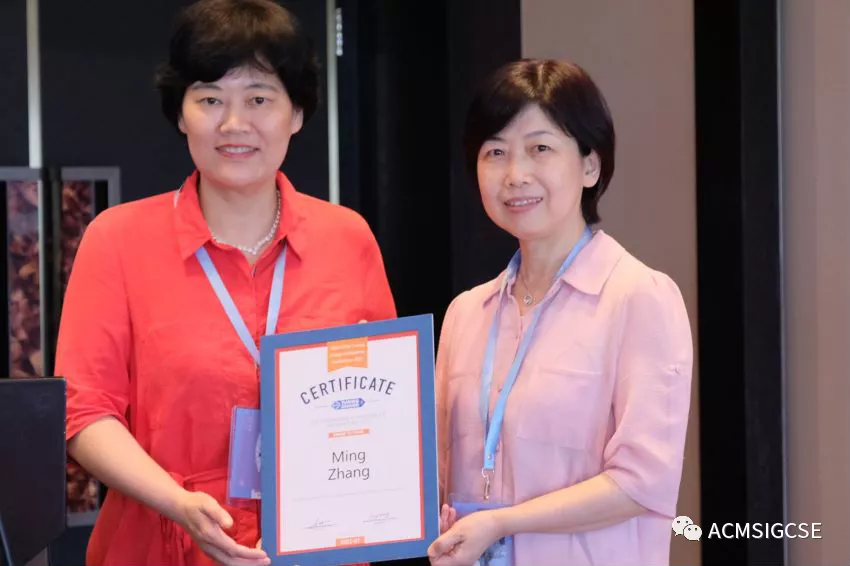
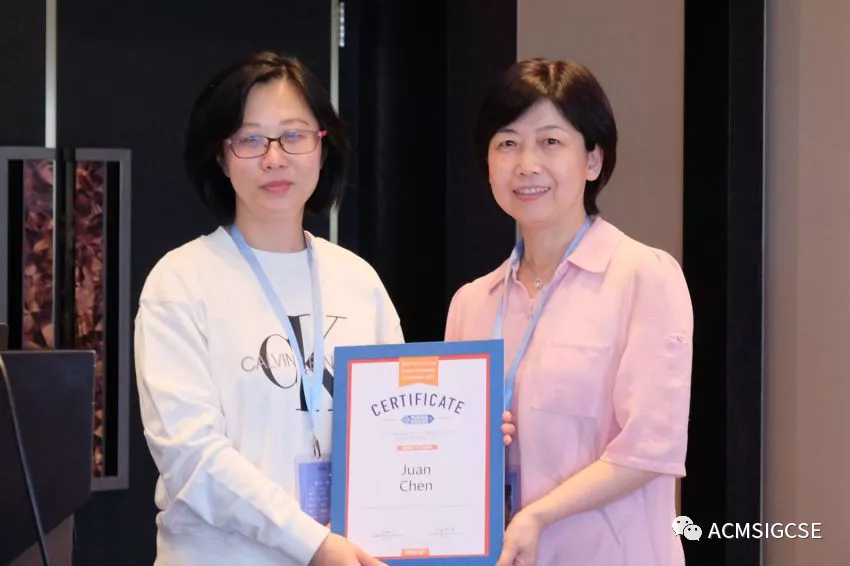
On the afternoon of July 31, Professor Ming Zhang of Peking University and Professor Juan Chen of National University of Defense Technology gave invited reports. Professor Zhang Ming gave an in-depth interpretation of the ACM/IEEE CC2020 standards with the title of “Competency Model in ACM/IEEE CC2020 Computing Curriculum”. CC2020 emphasizes the Meta Curricula, and adopts an evaluation model named “Competency”, integrating Knowledge, Skills and Dispositions, focusing on aspects such as professional quality, team working and other soft skills. Professor Zhang Ming also pointed out that the Competency model will play an important role in “promoting the innovation of technology and engineering via ability cultivation”, which was emphasized in the “New Engineering” program in China. Professor Chen Juan’s report was titled “Competency-based HPC Education Practices”. She shared the long-term and in-depth exploration experience of National University of Defense Technology in the cultivation of high-performance computing independent innovation talents, relying on the high-level scientific research strength in supercomputers, and discussed with the participants about how to carry out the cultivation of independent innovation talents, how to practice competency model and other issues. The invited reports were hosted by Professor Zhang Yu from University of Science and Technology of China. |
||
 |
||
 |
||
|
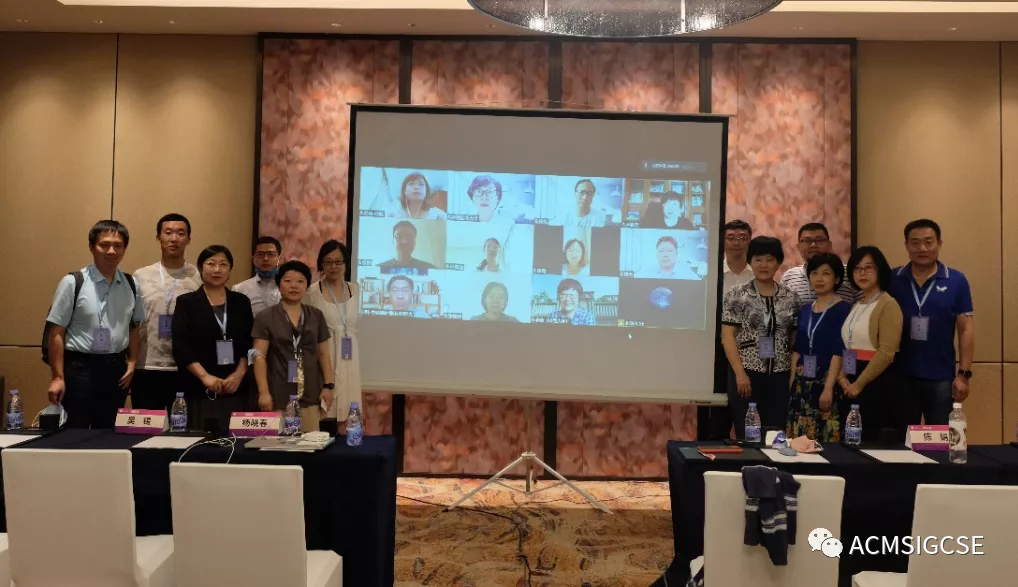
In the panel session, the discussion theme was about ACM/IEEE CC2020. The panel was chaired by Professor Xu Zichen of Nanchang University. Professor Yang Bo of Jinan University, Professor Zhang Ming of Peking University, Professor Chen Juan of National Defense University of science and technology, Professor Wu Xi of Chengdu University of information engineering, and Yang Xiaochun, an independent consultant of Shanghai AchieveFun Info Tech Co., Ltd., served as panel guests. Special topic, such as how to implement competency models in China, was discussed in depth during this panel session. |
||
 |
||
|
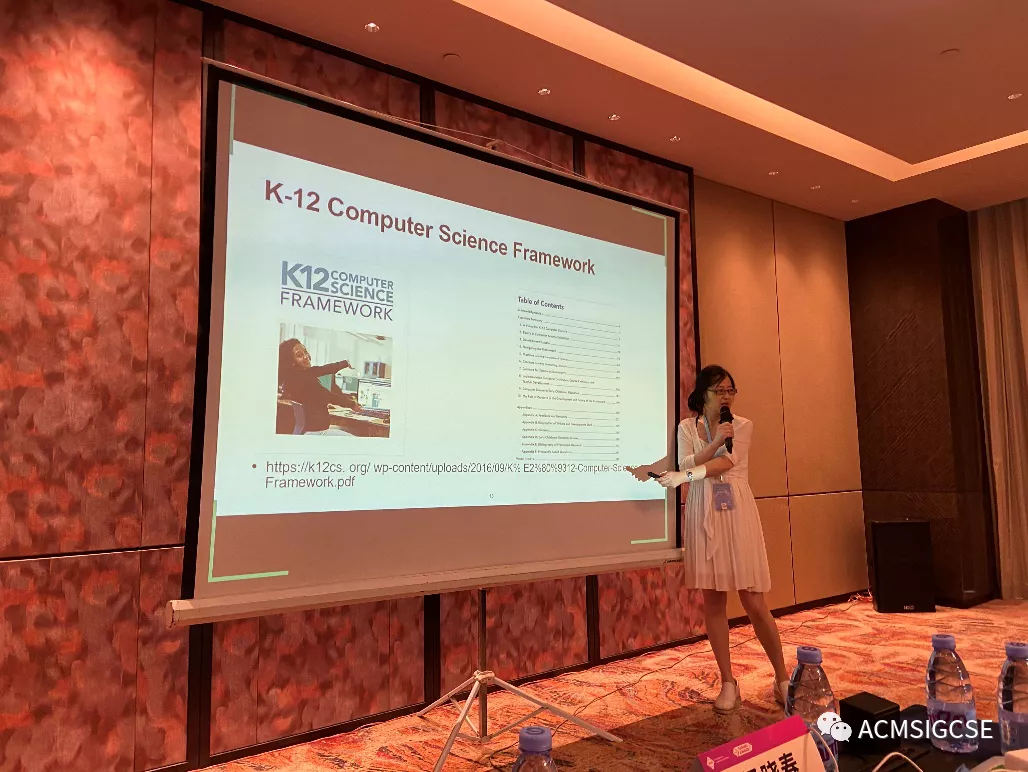
On the afternoon of August 1, Yang Xiaochun, a member of the ACM/IEEE CC2020 Computing Discipline Specification Working Group and an independent consultant of Shanghai AchieveFun Info Tech Co., Ltd, focused on the theme of “Enlightenment of Computer Education in Current U.S. High Schools to Corresponding Education in China”. She introduced the background and progress of the current development of computer education in primary and secondary schools in China and the United States, summarized related research, analyzed and compared the core concepts and core practices of the two systems. By comparing the content, teaching system, structure and evaluation methods of pre-university courses in the two countries, the report explored the impact of computer education in high schools in the two countries on university computer education and the possible differences in university education between the two countries in the future. |
||
 |
||
 |
||
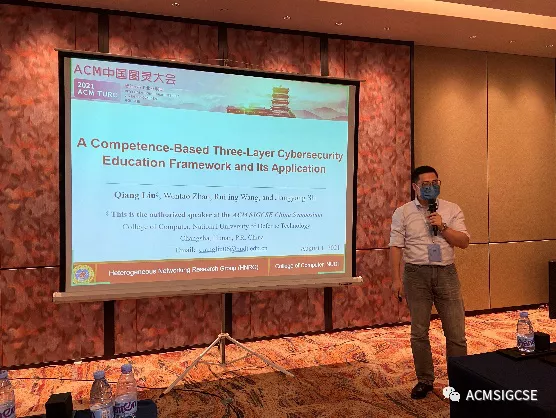
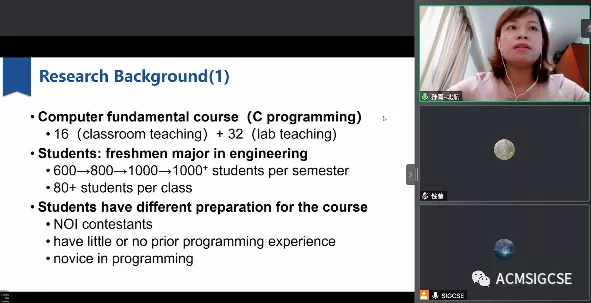
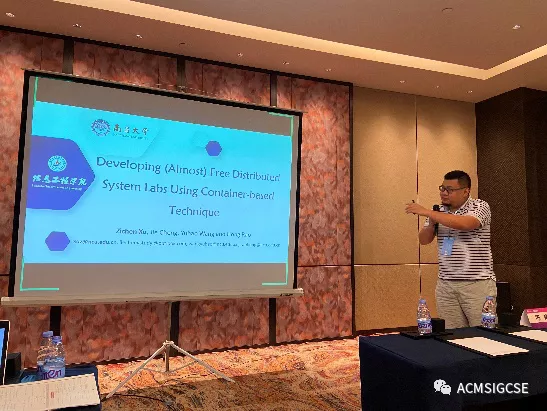
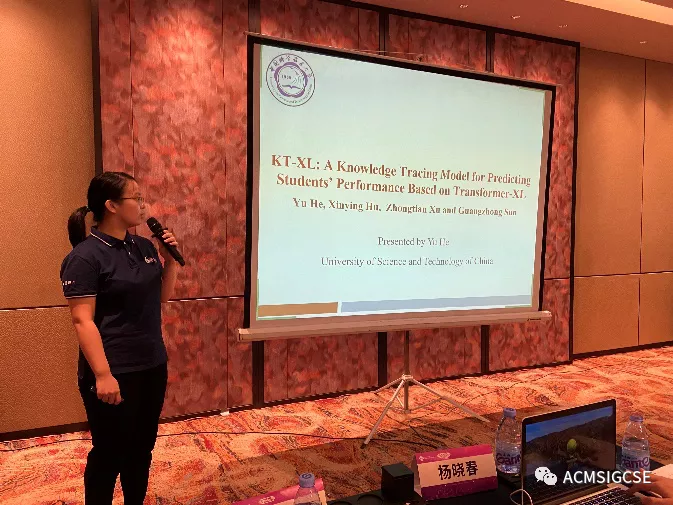
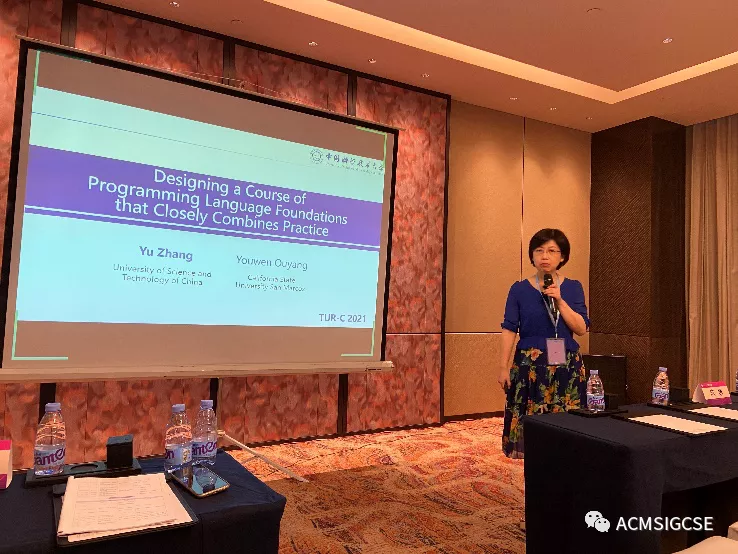
Paper sessionOn the afternoons of July 31 and August 1, 10 papers were presented at the SIGCSE Symposium, 7 from TURC2020 and 3 from TURC2021. The TURC2020 received 33 submissions and accepted 7 papers, with an acceptance rate of 21%. The TURC2021 received a total of 21 submissions, 3 were accepted, and the acceptance rate was 14%. All manuscripts were in English and were reviewed by double-blind review. The 10 papers accepted in the past two years were from front-line teachers and teams from Tsinghua University, Harbin Institute of Technology, University of Science and Technology of China, National University of Defense Technology, Northeastern University, Beihang University, Nanchang University, etc. They shared their experiences in computing teaching and scientific research at this symposium. Topics include teaching system, curriculum design, teaching support system, experimental courses, educational data analysis and application. This session brought the participants a practical scheme for the application of educational ideas and educational technology. |
||
 |
||
|
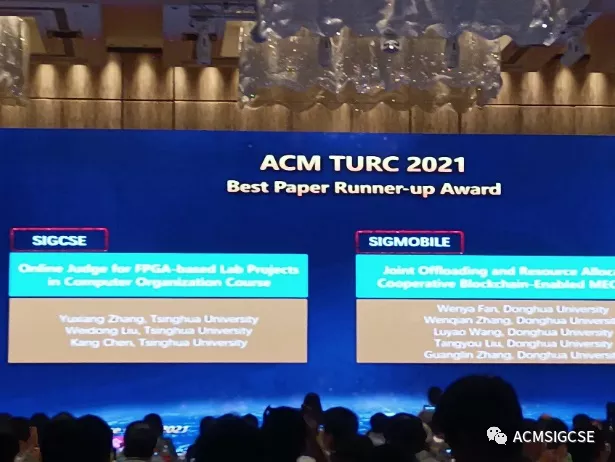
The paper “Online Judge for FPGA-based Lab Projects in Computer Organization Course” written by Dr. Yuxiang Zhang of Tsinghua University and others won the 2021 ACM China Turing Conference Best Paper Runner-up Award. |
||
 |
||
 |
||
|
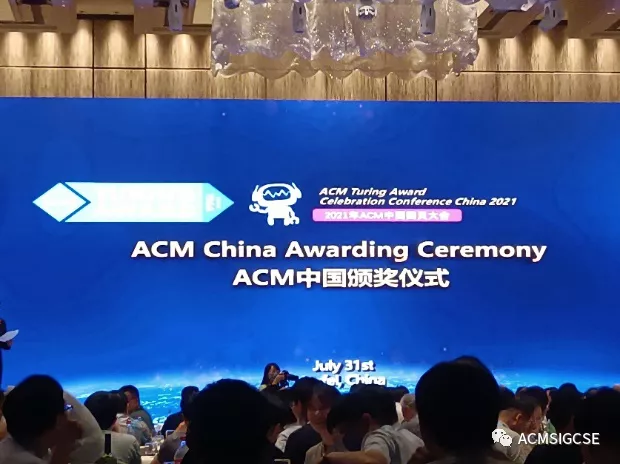
The 2021 ACM China Turing Conference awards. |
||
 |
||
 |
||
 |
||
 |
||
 |
||
Papers presented at TURC2021: |
||
SIGCSE China Council MeetingThe SIGCSE China Council Meeting was held at 16:30-17:30 pm on July 31, chaired by Professor Ming Zhang, Chairman of SIGCSE China, with a total of 20 executive directors and directors participating. Topics included: Turing Conference SIGCSE China Call for Papers and paper acceptance, SIGCSE China international paper publications in recent years, CC2020 in China's promotion and implementation and the collection of Chinese cases, past year SIGCSE China events, work report of the executive director in the past year, work plan for the next year, etc. |
||
other events: |
||